From reactive to predictive: Why AI's biggest value may be quality
What you’ll learn:
- Quality represents one of the most valuable applications of artificial intelligence in manufacturing today.
- Manufacturers seeing the greatest value from AI are using it to help identify potential risks before they become problems.
- AI is also helping streamline complex engineering and quality processes, tasks such as validating components against bills of materials, checking compliance requirements, or reviewing engineering documentation.
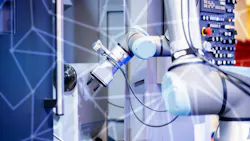
For decades, manufacturers have focused on finding defects. The next opportunity is to prevent them altogether.
For many industrial organizations, quality remains one of the largest sources of avoidable cost. Scrap, rework, warranty claims, production downtime, recalls, and service issues all erode margins and harm customer confidence.
See also: Physical AI’s growth expected to explode
Yet many of these problems share something in common: They don't begin on the factory floor. They begin much earlier, during engineering. That's why I believe quality represents one of the most valuable applications of artificial intelligence in manufacturing today.
The conversation around industrial AI has matured considerably over the past few years. Manufacturers are moving beyond experimentation and asking a more important question: Where can AI create measurable business value? Quality is one of the clearest answers.
For many industrial manufacturers, the cost of poor quality represents between 15% and 20% of total sales revenue. More importantly, over 60% of quality issues originate during engineering and design, where decisions about materials, components, manufacturability, compliance, and product architecture shape everything that follows.
By the time a defect is discovered during production—or worse, after a product reaches the field—the cost and complexity of correcting it has increased dramatically.



This changes how manufacturers should think about quality. For years, many quality programs have focused on finding defects as efficiently as possible. Inspection remains essential, but inspection alone cannot prevent problems that were introduced months earlier during product development.
Manufacturers seeing the greatest value from AI are using it to help identify potential risks before they become problems. That shift—from reactive quality management to predictive quality management—is where AI has the potential to make a meaningful difference.
Quality depends on connected information
The biggest obstacle isn't a lack of data. Most manufacturers already possess enormous amounts of engineering, manufacturing, quality, supplier, and service information.
The challenge is that this information often exists in separate systems, making it difficult to understand how decisions made in one part of the product lifecycle affect another.
Engineering teams may not see how a design change impacts manufacturing. Manufacturing may not have complete visibility into evolving product requirements. Service organizations may identify recurring field issues that never make their way back to engineering.
These disconnects create blind spots that allow quality issues to persist until they become expensive to resolve. AI can help—but only when it has access to connected product information.
See also: Industrial IoT starts with the physical layer: Rethinking cables, conductors and connectivity
This is where the digital thread becomes essential. By connecting requirements, designs, bills of materials, suppliers, manufacturing processes, quality records, and service feedback, manufacturers provide AI with the context needed to recognize patterns, identify potential risks, and support better decision-making throughout the product lifecycle. Without that connected foundation, AI has limited ability to deliver meaningful recommendations.
Moving AI beyond simple automation
Much of the discussion surrounding AI focuses on productivity. While automating repetitive work is valuable, manufacturers are applying AI in ways that directly influence product quality.
The first is helping engineers make better-informed decisions. Instead of searching across multiple systems for supplier information, component availability, regulatory requirements, or historical product knowledge, engineers can access relevant information within their existing workflows. This allows design decisions to incorporate manufacturing, supply chain, cost, and compliance considerations much earlier in development.
Perhaps the greatest opportunity lies in engineering change management. Engineering changes rarely affect a single component. AI can help organizations understand those impacts faster, coordinate stakeholders, maintain traceability.
AI is also helping streamline complex engineering and quality processes. Tasks such as validating components against bills of materials, checking compliance requirements, or reviewing engineering documentation can be completed more efficiently, reducing manual effort while improving consistency.
See also: Growth in IoT sensor market points toward strong momentum for DX
Perhaps the greatest opportunity lies in engineering change management. Engineering changes rarely affect a single component. They often influence manufacturing processes, supplier relationships, documentation, compliance activities, and downstream service.
AI can help organizations understand those impacts faster, coordinate stakeholders, maintain traceability, and reduce the manual effort required to manage complex changes across the enterprise.
Quality begins earlier than many organizations think
One of the most important shifts occurring across manufacturing is the recognition that quality should not begin with inspection. It should begin with design.
AI-powered simulation, predictive analytics, and generative design give manufacturers opportunities to evaluate products virtually before production begins. Engineers can identify potential performance issues, assess manufacturability, and validate design decisions when changes remain relatively inexpensive to implement.
Finding and correcting a problem during engineering is fundamentally different from discovering the same issue after production has started or after equipment has been deployed in the field.
Moving quality earlier in the product lifecycle not only reduces costs but also shortens development cycles, improves collaboration, and helps organizations respond more effectively to changing customer and regulatory requirements.
Building a foundation for industrial AI
Technology alone will not transform quality. The manufacturers making the greatest progress tend to follow several common practices.
First, they establish trusted product data that serves as a single source of truth across engineering, manufacturing, quality, supply chain, and service.
Second, they connect that information through a digital thread so AI can understand relationships across the product lifecycle rather than analyzing isolated data points.
Third, they select AI technologies designed for industrial environments that provide transparency, scalability, security, and protection for intellectual property.
See also: For sweeter AI adoption, Hershey and KDP utilize Augmentir's connected worker platform
They also integrate AI directly into the engineering and operational systems employees already use instead of requiring people to work in disconnected applications.
Finally, they encourage closer collaboration between engineering, manufacturing, quality, and service organizations so insights generated by AI can influence decisions earlier in the development process.
The business case is already emerging
The value of moving quality upstream is no longer theoretical. Organizations have already demonstrated measurable improvements by identifying and addressing quality issues earlier in the product lifecycle.
Volvo CE achieved up to a 30% reduction in the cost of poor quality. NIDEC reported a 40% decrease in costs associated with non-quality deliverables. Vaillant Group improved first-pass sample approval by 53% while reducing rework by 16%. These examples demonstrate the business impact of shifting from inspection and correction toward prediction and prevention.
As industrial products become more sophisticated and manufacturing ecosystems continue to evolve, manufacturers will need to make better decisions earlier and with greater confidence. AI will not replace experienced engineers or quality professionals. Their expertise remains essential.
See also: Navigating financial anxiety around paying the bill for industrial AI
What AI can do is provide those teams with better visibility into connected product data, identify relationships that are difficult to detect manually, and help organizations act before quality problems become production problems.
Manufacturers don't need more quality data. They need to connect the data they already have and use it to influence decisions when they can still change the outcome.
That's why quality may prove to be one of industrial AI's most important applications—not because AI changes the definition of quality, but because it gives manufacturers a better opportunity to build quality into products from the very beginning.
About the Author
 Florian Harzenetter
Florian Harzenetter
Florian Harzenetter is senior director and global advisor for industrial customers at PTC, where he helps manufacturers align business strategy, technology roadmaps, and digital transformation initiatives.
With more than 15 years of experience in PLM and business development, he has worked with leading manufacturers such as ABB, FESTO, Vaillant, and TRUMPF. He also serves on the board of the Industrial Digital Twin Association.