The last unconnected asset on the plant floor: The case for ‘smart’ PPE
What you’ll learn:
- Equipment, inventory, and processes now carry digital identities. Yet, the PPE that workers carry every day has, until recently, lacked a digital identity.
- At most facilities, a safety helmet that a maintenance tech wears into a mechanical room is tracked the same way it was 30 years ago.
- Each piece of ‘smart’ PPE carries a unique digital ID linked to a specific worker at the moment of issuance.
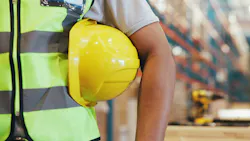
Walk the floor of a modern industrial facility, and digital investment is visible everywhere. Sensors are integrated into conveyors, and compressors send condition data to centralized dashboards. Production systems log every output and error in real time.
A facility's equipment, inventory, and processes now carry digital identities, and increasingly so do the workers moving within it. And yet, the personal protective equipment that workers carry every day has, until recently, lacked a digital identity.
See also: IoT sensor market points toward strong momentum for DX
At most facilities, a safety helmet that a maintenance tech wears into a mechanical room is tracked the same way it was 30 years ago. A safety manager charts them by hand at issuance, files them in a binder somewhere, and inspects them on a clipboard that may or may not reflect what actually happened.
PPE management became the last major operational category still running on a manual process because PPE was framed as a compliance obligation rather than an operational data problem, and digital investment followed the framing. For most facilities, it remains the largest gap in an otherwise connected digital transformation.
RFID, NFC can help solve PPE’s DX disconnect
Today, chips like RFID and near-field communication are changing this disconnect. NFC chips embedded in manufacturing gear like helmets, harnesses, self-retracting lifelines, and safety vests turn passive protective equipment into connected assets with a persistent digital record, readable by any smartphone tap, with no dedicated reader hardware required beyond the smartphones workers already carry.
Across industrial environments, workers collectively carry millions of helmets, harnesses, and lifelines every day. The NFC chips embedded in safety gear require no battery, add no meaningful weight, and can store complete operational records, including issuance date, inspection history, certifications, expiration timelines, and the worker's emergency medical profile.
As that equipment acquires a digital identity, the operational data it generates changes what safety and operations teams can see, track, and act on in real time.
Unlike most IIoT deployments, it requires no gateways, power runs, fixed reader stations, or network buildout, which means it functions in the environments where most connected systems don't reach, including remote maintenance sites, high-noise facilities, and locations where standing up new hardware is cost-prohibitive.
Inventory that runs on data, not emergencies
Each piece of smart PPE carries a unique digital ID linked to a specific worker at the moment of issuance. From there, the platform maintains a real-time view of the full PPE fleet across every shift and location, showing what is deployed, who has it, when it was issued, and when it needs to be replaced based on actual lifecycle data against manufacturer guidelines.
See also: What to do when ‘rip-and-replace’ is financially impossible
The operational change this produces in procurement is significant. Replacement decisions shift from reactive responses to equipment failures, loss, or audit flags to planned, data-informed purchasing tied to actual usage patterns. For facilities managing multiple buildings or rotating contractor workforces, the reduction in emergency orders and duplicate purchasing is where the financial return shows up first.

Inspection records that write themselves
Workers receive digital inspection prompts for their assigned equipment and complete guided checklists on their smartphones at scheduled intervals like before and after each shift. Every completed inspection is automatically logged, time-stamped, and linked to the equipment's digital ID and thus the employee, without manual entry by a safety manager.
Under OSHA 29 CFR 1910.132, organizations are required to maintain inspection records. To simplify that process, they can use an online platform to capture each piece of equipment and log it in real time. When an inspection is overdue, managers are alerted and automatically send notifications to the employee through the app until it is completed.
Workers receive digital inspection prompts for their assigned equipment and complete guided checklists on their smartphones at scheduled intervals like before and after each shift.
When an auditor arrives, the complete inspection history for every piece of equipment in the fleet is available on demand, and audit preparation that previously took days is reduced to a single digital export. The financial return also shows up in the avoidance of potential compliance violations.
On-demand medical information
Every safety management system eventually gets tested by a workplace medical emergency. When that moment arrives on an industrial floor, accessibility to critical medical information determines outcomes.
When a worker is injured and unable to communicate, a first responder can tap an NFC-enabled helmet with a smartphone or tablet to access their medical profile in seconds. The profile can include allergies, medications, emergency contacts, and any pre-existing conditions, stored offline on the chip and accessible without network connectivity or a central database.
See also: Industrial IoT starts with the physical layer: Rethinking cables, conductors and connectivity
Workers can keep helmets on in situations where responders suspect a head or spinal injury. In the moments after an injury, having that information immediately on hand allows responders to avoid guesswork and treat the worker in front of them better informed.
The business case for ‘smart’ PPE
“Smart” PPE carries a nominal premium over standard equipment, and a safety management platform subscription adds to that premium, but most implementations recoup the investment through improved purchasing planning, reduced emergency purchasing, staff time saved from manual recordkeeping, and compliance fines avoided from poor recordkeeping.
See also: AI stokes debate over cloud-powered compute vs. on-prem
The harder argument involves costs that never appear on any existing dashboard, such as uninspected equipment flagged too late, emergency response slowed by missing medical information, and procurement spending driven by loss rather than usage data. Those unattributed line items can cascade over time without a better system to capture them.
Digital transformation investment in manufacturing is only as complete as its least-connected component, and for most facilities, that component is still the human wearing and working in the protective gear.
About the Author
 Christian Connolly
Christian Connolly
Christian Connolly is CEO of a Swedish safety technology company, Twiceme Technology. Twiceme’s business is "smart" safety solutions for professional environments, embedding NFC-based digital safety features into personal protective equipment—including helmets, safety harnesses, and self-retracting lifelines—that is used in industrial and construction environments. Twiceme partners with PPE manufacturers such as Bullard, Studson, and Guardian to help manufacturers digitally transform their PPE management.