DX is diminished if your workforce isn’t upskilled
What you’ll learn:
- When employees are not prepared for these broader responsibilities, manufacturing leaders risk investing in advanced technology without realizing its full value.
- The “renaissance” employee has always crossed disciplines rather than staying inside one.
- Workers must be prepared to learn throughout their careers rather than relying on the expertise they developed when they first entered a role.
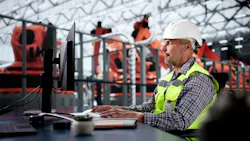
Walk a plant floor and ask people what they do; the answers will match their job titles. Then watch them work for an hour and you may realize those titles no longer describe the work or the typical skills manufacturers increasingly depend on.
As manufacturers adopt AI, robotics, digital twins and connected production systems, frontline roles are expanding beyond their traditional boundaries.
See also: ChatGPT won't run your plant, but here's what industrial AI needs instead
But when employees are not prepared for these broader responsibilities, manufacturing leaders risk investing in advanced technology without realizing its full value and are introducing new risks to quality, safety and uptime.
The “renaissance” employee has always crossed disciplines rather than staying inside one. That worker is taking shape on the factory floor, and these aren’t people who know a little about everything but they’re specialists whose expertise extends beyond what’s on their badges.
This doesn’t mean machine operators need to become engineers or that maintenance techs must become data analysts.
It means workers need enough knowledge beyond their primary discipline to understand how technology affects the task they already know how to perform, recognize when something is wrong, and determine what should happen next.
Their range must complement, not replace, the specialized expertise that allows them to act on what they see.
Automation is broadening work, not replacing it
Most of the automation conversations are about what technology takes away, but the more interesting question is what it hands back.
As technology takes over predictable, repetitive tasks, employees shift their focus to work that requires human judgment, problem-solving, and adaptability.
They must oversee systems, investigate irregularities, and make decisions when an automated process encounters a situation it was not designed to handle.
A machine operator working alongside an AI-enabled production system, for example, must not only run the equipment but respond to information about its performance, evaluate AI-generated recommendations and determine whether an issue stems from the machine, its inputs, the underlying data or another connected process.
See also: As AI adoption matures, data center controversies move to the fore
This requires more than technical training on a particular tool. It demands critical thinking, systems awareness, and enough knowledge of the process, equipment and operating conditions to question technology when experience suggests a different answer.
In other words, as automation takes more of the execution, the employee’s role increasingly shifts toward interpretation and intervention.
Digital fluency is different from technical mastery
Manufacturers do not need to turn every employee into a technology expert. They need digitally fluent workers who know enough to use an AI model, robot or digital twin responsibly, interpret its output and recognize its limitations.
This is where the distinction between access and understanding becomes especially important. AI can help an employee find information, generate an analysis or contribute to a task outside their usual responsibilities.
As automation takes more of the execution, the employee’s role increasingly shifts toward interpretation and intervention.
However, receiving an answer is not the same as comprehending it. Fluency requires employees to connect that information to the realities of their work and recognize when a seemingly plausible answer does not fit the situation in front of them.
Yet employees are being asked to make those calls largely on their own. In our latest workforce readiness research, 31% of respondents said AI guidance at their organization varies by team or manager rather than following a companywide standard, and fewer than one in 10 said their organization has comprehensive AI governance in place.
That gap can be especially pronounced among frontline workers, who may have less access to formal guidance, dedicated learning time, or communication channels through which AI policies are typically shared. Manufacturers are asking them to judge AI output without ensuring they have received a clear, consistent standard for using it.
Podcast: 'Muddy waters' of implementing AI and how manufacturers can avoid them
Manufacturers should therefore define digital fluency within the context of actual work. Broad, generic technology training may introduce important concepts, but employees also need opportunities to apply those concepts to the systems, decisions and problems they encounter every day. That practical fluency gives workers the foundation to exercise the human judgment that more autonomous operations require.
Human capabilities become more important as systems advance
AI can identify a pattern in production data, but an experienced employee may understand that the pattern resulted from an unusual material, a recent process change, or a temporary environmental condition.
Tomorrow’s frontline employees will need to evaluate information rather than simply receive it: separating signal from noise, understanding how one decision affects the wider operation and communicating what they see across production, engineering, maintenance and technology teams.
Before deploying a new system, leaders should identify how it will change employees’ responsibilities.
Picture a quality inspector who has flagged an AI vision system as wrong three times this month. They’re right each time but can't explain why in a way the engineering team finds convincing. Until they can, the system keeps its settings, and they keep catching defects it misses.
The inspector’s ability to translate experience into evidence the engineering team can act on is what turns an individual observation into an operational improvement. That exchange isn’t separate from the technology’s value; it’s what allows the manufacturer to realize it.
See also: Smart industrial innovation is commoditizing faster than you think
Adaptability will also be critical. Manufacturing employees have always adjusted to changing production demands, but the pace of technological change means the tools themselves will continue evolving. Workers must be prepared to learn throughout their careers rather than relying on the expertise they developed when they first entered a role.
These capabilities should not be treated as “soft” additions to technical work. In an automated environment, they are operational skills that directly affect uptime, quality, safety and productivity. If manufacturers increasingly depend on employees to make sense of what tech cannot, those capabilities must be developed as deliberately as any skill.
Preparing workers before roles outgrow them
Manufacturers cannot wait until new technology is installed to determine whether employees are prepared to use it. Workforce and technology planning must happen together.
Before deploying a new system, leaders should identify how it will change employees’ responsibilities, decisions and skill requirements so they can address emerging gaps while preserving the specialized knowledge automation cannot replace.
That requires a continuous approach to skills management: understanding where capabilities exist, where they are beginning to thin, and what employees will need next.
Manufacturers cannot wait until new technology is installed to determine whether employees are prepared to use it. Workforce and technology planning must happen together.
Development should then be practical and continuous. Rather than relying on lengthy, one-time training programs, manufacturers should provide learning connected to real tasks, reinforced through coaching, peer learning and on-the-job problem-solving.
Cross-functional exposure can also help employees understand how their work connects to adjacent areas without expecting them to become experts in every discipline.
See also: AI in manufacturing won’t deliver until supplier ecosystems are connected
The renaissance manufacturing worker is already on your floor. They're the operator who noticed the data was wrong before the system did, and the technician who knew which alert to ignore.
The question is whether leaders will recognize and develop these workers before their roles outgrow the skills systems built to support them. The technology strategy may be new, but it will succeed or fail based on whether there is an equally deliberate plan for the people expected to make it work.
About the Author
 Leena Rinne
Leena Rinne
Leena Rinne is VP of leadership, coaching and business solutions for Skillsoft, a skills management company. She sets the vision and strategic direction for Skillsoft's leadership, coaching, and business solutions. Her responsibilities include strategy formulation, operational execution, and product roadmap management.
As two-time Wall Street Journal best-selling author and speaker, she has presented at international conferences such as PCMA, SHRM, ATD, and the World Business Forum. Her background in facilitating transformational leadership experiences has made her a trusted adviser to executives and organizations worldwide.