As AI adoption matures, data center controversies move to the fore
What you'll learn:
- The question is how to accommodate data centers and large compute facilities, including those handling industrial AI demands, when public opinion is souring on them.
- Politicians who once celebrated the arrival of data centers in their jurisdictions—and touted AI as a new frontier—are hedging or even reversing their positions.
- All of this AI functionality demands either on-prem or remote, cloud-based capability of the kind data centers supply in abundance.
Editor's note: Smart Industry this year has chosen to surge our coverage of AI adoption to follow an obvious trend—and physical infrastructure is quite related to the broad increase of implementations in manufacturing sectors of every kind.
As a result, we're introducing our audience to an issue that has been swirling in many parts of the U.S. and the world—data centers. This piece is borrowed in large part from our sister brand, T&D World, but is augmented by some of SI's reporting on how manufacturing AI fits into the data center debate.
As artificial intelligence is piloted and grows throughout manufacturing, and companies encourage forms of it such as generative and agentic AI across their teams, data centers are inevitably becoming part of the conversation.
The question of how to supply enough power to facilities packed with computer servers, data drives, and networking gear remains hard to answer—and public opinion, in the U.S. at least, is souring toward these facilities in part because of their ever-expanding power usage and their effects on utility capacity and customer bills in countless communities.
See also: From labs to factories: Physical AI’s growth expected to explode
Politicians who once celebrated the arrival of data centers in their jurisdictions—and touted AI as a new frontier—are hedging or even reversing their positions as power affordability takes center stage in many election campaigns this summer into the fall.
To citizens in communities across the U.S. that host or may host data centers, this has, justifiably or not, become the newest NIMBY (not in my backyard) cause célèbre.
AI in manufacturing turns up pressure for compute resources
On another side of the issue, data itself is a large part of the AI implementation conversation in manufacturing. Many manufacturers are struggling to successfully implement AI agents or are just piloting their use, and they’re under growing pressure to put AI to work in their factories to catch defects in real time, guide operators and extract additional capacity out of existing lines.
However, many companies are struggling to implement agents effectively on the floor, often struggling with the data that agents need to be properly "trained." Companies often fall short in organizing their data; connecting data and agents across company teams; and handling the volume of data that is useful for training and implementing agents.
See also: AI stokes debate over cloud-powered compute vs. on-prem
Meanwhile, two-thirds (67%) of supply chain managers told research company Gartner for a new survey that their current digital investments are being allocated to AI, more than half (55%) said they are unclear on the return on investment the technology might yield.
All of this AI functionality demands either on-prem or remote, cloud-based capability of the kind data centers supply in abundance.
The data center need is robust, but support is headed south
Amid these growing pressures connected to AI’s growth, lawmakers in the U.S. are navigating the construction of data centers while public opinion measurably lines up against them. But this wasn't the case until relatively recently.
In many states, sometime in the 2000s or 2010s, lawmakers passed legislation giving subsidies or other support to developers who wanted to bring data centers into local communities. Now, as these facilities are being constructed, the economic picture has come into focus—and in many places it’s not pretty to many people and their pocketbooks.
Some states are losing billions in tax revenue and their constituents are asking why they should have to foot the bill for some of the world’s wealthiest companies—Big Tech heavyweights such as Microsoft, Google, and Amazon—that are behind or substantially benefit from the construction or existence of data centers.
States wanted, and many still want, to be seen as technology-forward in the hopes of becoming hubs for advanced AI facilities, but now that AI’s needed infrastructure is building out, the question of who will pay for it all has become pressing.
See also: Industrial IoT starts with the physical layer: Rethinking cables, conductors and connectivity
Politicians from both major political parties are adopting a more cautious tone toward Big Tech, sometimes promising to impose new fees, environmental regulations or even moratoriums on data center infrastructure.
When customers are asked what they blame for increasing utility bills, many see hyperscaler companies and data centers as the biggest drivers, particularly in places where they can see the infrastructure going up close to their homes, schools, churches, and businesses.
The following is a breakdown of the data center issue in 13 states in the U.S. where the issue has boiled over the most:
In Virginia, evolving incentives (769 data centers)
Due to a combination of both government-run and private interests, Virginia is currently the data center capital of the U.S., with Loudoun, Fairfax and Prince William counties, each located in the northern part of the Commonwealth, and even suburbs farther out in central Virginia like Culpeper County, serving as hotbeds for data center development.
Some developers used favorable subsidies from local governments to help build their centers, and Virginia and data centers have been synonymous since the 1990s due to a large amount of federal defense, intelligence, energy, space and other agencies hosting their computing power in Washington, D.C.’s backyard.
America Online also years ago, during the dial-up internet era, took up Loudoun as its infrastructure headquarters. Subsidies aside, the availability of land and relatively cheap energy made Virginia attractive for developers.
See also: Smart industrial innovation is commoditizing faster than you think
Virginia so far has elected to maintain subsidies for data centers, even as the amount of foregone revenue to the state has grown to an estimated $1.9 billion.
The Commonwealth is instead placing its bets on an energy usage fee as a way to update its policies to the new reality of data centers—and to appease the restless citizenry in many communities there.
Virginia Gov. Abigail Spanberger told Politico on July 6 that her state would enact a statewide energy consumption tax on data centers, paired with measures to shield electric ratepayers from the costs of installing new energy infrastructure for data centers and other high-demand industries.
“In the budget that we passed, we created the first-of-its-kind consumption tax on data centers and their energy usage,” Spanberger said.
“We want data centers to pay their fair share—the way to get at that is by ensuring that they’re paying this consumption tax, based on their energy consumption. And we can couple that into the future with longer-term views of what are the standards we want to set in Virginia for water usage, for backup energy generation.”
According to reporting from the Virginia Mercury, the energy consumption tax could bring in about $600 million per year, with the industry paying 1.1 cents per kWh consumed up to the cap.
We want data centers to pay their fair share—the way to get at that is by ensuring that they’re paying this consumption tax, based on their energy consumption.
- Virginia Gov. Abigail Spanberger
Spanberger said she recently appointed and created the Office of Chief Energy Officer in Virginia in part to identify ways to protect customers from higher energy bills, according to a release from the Virginia governor’s office.
See also: For two firms, better data is making for more useful AI implementations
“Our chief energy officer is doing a lot of our work directly with PJM—really trying to push for some changes and modifications in PJM, both to drive additional energy generation and inclusion of newer energy generation in the PJM marketplace, but ultimately to the benefit of ratepayers across Virginia,” she said.
In Florida, attempts at ratepayer protections (94 data centers)
Normally completely on the opposite side of the political spectrum from the Democrat Spanberger, Florida Gov. Ron DeSantis has nevertheless at times been critical of data center development, saying that taxpayers should not be responsible for subsidizing some of the wealthiest companies ever.
In May, DeSantis signed legislation directing the Florida Public Service Commission to keep the costs of new data centers off Floridians’ electric bills.
According to Newsweek, the Florida measure also empowers local governments to block the development of new data centers. More than a dozen counties and cities in the Sunshine State have enacted moratoriums on data centers, according to the Tallahassee Democrat, most of which are temporary and expire within one year.
The issue of data centers has turn up the heat in the campaign for the next governor of Florida.
Two Republicans, U.S. Rep. Byron Donalds and Lt. Gov. Jay Collins, both say the state needs more regulations on data centers. Former House Speaker Paul Renner and activist and businessman James Fishback, both of whom are running for the Republican gubernatorial nomination, say they want either moratoriums or outright bans on data centers in their state.
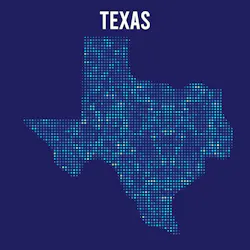
Reassessing incentives in Texas (723 data centers)
As a major energy-producing state, Texas has also become host to a growing number of data centers.
Republican State Rep. Shelley Luther told CBS News in an interview that while Texas is known for its size, there are limits to how much development the Lone Star State can accommodate.
"Steaks don't come from H-E-B, as I like to say. They've got to come from somewhere. Rural Texas. You got to preserve this land and not put a big industrial footprint on it,” Luther said.
Gov. Greg Abbott, who is campaigning for re-election, told a campaign rally that data center developers should be responsible for funding their own projects and the infrastructure that supports them.
"We must prohibit them from building AI data centers in rural Texas neighborhoods, and we must eliminate the tax break they are getting," Abbott said.
In August, Abbot ordered the Public Utility Commission of Texas and Electric Reliability Council of Texas to halt data center approvals until audits are completed. Audits would include such conditions as what tax incentives are received, who owns the facilities, power and water use, and any impacts on local communities. It’s not immediately clear how long such audits would take.
We must prohibit them from building AI data centers in rural Texas neighborhoods, and we must eliminate the tax break they are getting.
- Texas Gov. Greg Abbott
This stance represents a shift in attitudes toward Big Tech in the Texas political class, which is dominated by Republicans.
Abbott had called his state “the epicenter of AI development” only last November during an announcement of a $40 billion Google project that would help build new cloud computing and AI infrastructure, including new data center campuses in Armstrong and Haskell counties.
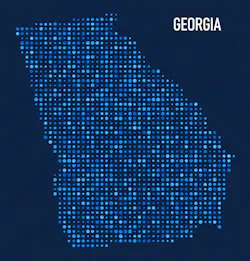
In Georgia, re-evaluating who pays (296 data centers)
Georgia has had laws and incentives favorable to data center development since 2018, when the state approved a sales tax exemption to lure large developers into the Peach State.
The policy was successful, and the state now has 295 such facilities, according to Baxtel—the largest being a Microsoft facility called Fairwater 2 in Fayetteville, Georgia, just south of the Atlanta metro area, which has a capacity of 300 MW.
How the state’s utilities charge data centers to link up to the power grid is currently under discussion, with the Georgia Public Service Commission voting in July to review Georgia Power’s rubric for determining how much data centers pay for electricity.
According to the commission, Georgia Power’s use of real-time power pricing and whether it fully covers what data centers are consuming is at question.
See also: Making the case for data centers
While disputing the notion that large industries aren’t paying their fair share, Georgia Power told Atlanta News First that it supports the idea of an inquiry into the fairness of who pays for the power consumption.
“In the stipulation that resolved the recent fuel cost recovery proceeding, Georgia Power agreed to review the methodology by which revenue from large customers on the Real-Time Pricing rate is credited to fuel costs,” the company told Atlanta News First.
The Georgia Public Service Commission, according to its website, adopted a new rule in January 2025 that large customers with a demand exceeding 100 MW would constitute a new customer class and may have specialized billing terms.
In July, Early County, a rural area near the southwest border of the state, passed a set of restrictions on data center construction, requiring efficient cooling systems, noise limits, and a 1000-foot buffer from any home, school or church, according to WTVY News.
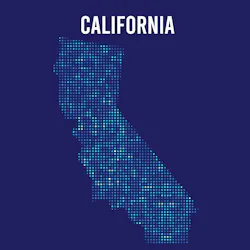
In California, stepping up regulatory oversight (304 data centers)
With Assembly Bills 2469 and 2619, California’s State Assembly is debating its approach to the widespread deployment of data centers there.
The bills in question would require developers to project how much water their facilities would use before getting approval to build, as well as require owner-operators to disclose how much is actually used once they are in operation, according to the Sacramento Bee.
Californians themselves are skeptical of new data centers, with the Public Policy Institute of California finding in July that 73% of respondents to their polling opposed to new facilities being built in their backyards.
Former Health and Human Services Secretary Xavier Becerra, a Democrat who is the front-runner in California’s gubernatorial race, said Big Tech companies need to pay their fair share and submit to new regulations to govern their operations.
See also: Stories of AI adoption: Wolfspeed all-in with 22 agents across key company teams
“California cannot accept technology moving so fast that a worker’s right to make a living and be treated with dignity is left behind, or that a child’s safety comes second to profit, or that the technology poses catastrophic risks to public safety,” Becerra says on his campaign website.
Meanwhile, giant California utility Pacific Gas & Electric has proposed a rule to the Public Utilities Commission to streamline the interconnection of large customers such as data centers. The commission itself suggested as one potential solution using demand-side management so that large customers shift their electricity use to off-peak times.
California cannot accept technology moving so fast that a worker’s right to make a living and be treated with dignity is left behind, or that a child’s safety comes second to profit, or that the technology poses catastrophic risks to public safety.
- Xavier Becerra, Democrat and front-runner to become California’s next governor
The voters of Monterey Park, California, voted to permanently ban data centers in their city in June, according to Reuters, partially as a response to organized public backlash against a planned facility there.

In Oregon, making sure large customers pay more (159 data centers)
In a change affecting nearly a million ratepayers, the Oregon Public Utility Commission on July 7 unanimously approved a 29.7% rate increase for Portland General Electric’s large electric consumers, including data centers, cryptocurrency companies, and large industries, according to Oregon Public Broadcasting.
At the same time, residential customers will see a 1.3% decrease in their rates. The new rates are already in force and impact 963,000 customers.
See also: Why AI's biggest value may be quality
PGE previously made the request in May to make sure its customers are not on the hook for electricity used by large customers like data centers at a time when electricity demand is rising along with rates. The charge is based on “contribution to growth” of electricity demand.
This order is the first use of Oregon’s 2025 POWER Act, passed by state legislators to address concerns surrounding the rapid demand for development of data centers. It applies to projects that use more than 20 MW, according to Oregon Public Broadcasting.
PGE is the first Oregon utility to change its rates based on the POWER Act’s reclassification of customers. Oregon Gov. Tina Kotek said she would also heed the recommendations of a newly formed Data Center Advisory Committee as she consults with lawmakers during the January 2027 legislative session in Salem.

In Illinois, a complete policy 180 (223 data centers)
In June, Illinois Gov. JB Pritzker, a potential candidate for the Democratic nomination for U.S. president, decided to halt data center tax incentives effective July 1.
This is a definite shift in policy, as Pritzker in 2019 was the one who first signed such incentives into law.
He also asked the Illinois legislature to pass more thorough reforms and regulations affecting large data centers, with the legislature having failed to do so by the end of their last session.
The Illinois laws under discussion would have required water use reporting standards and for data center developers to pay for and have their own supplies of renewable energy to power their facilities, according to Capitol News Illinois.
The state found that data center operators were netting more than $983 million over four years in tax incentives.

In Iowa, pro-growth mixed with cautious regulation (87 data centers)
Trump administration Deputy Energy Secretary James Danly visited Iowa in June to tout the benefits of data centers, calling them critical for America’s future.
“If there are unnecessary regulatory obstacles to the development of data centers, the United States is going to be put back on the scales in competition with other countries,” Danly said, according to the U.S. Department of Energy’s website.
Iowa’s only nuclear power plant, Duane Arnold Energy Center, was slated for decommissioning in 2020, but the plant has found new life in the new high energy demand environment, now slated to re-activate by 2028 thanks to a power purchase agreement with none other than Google.
See also: Podcast: Why data collection is worth the time, effort and expense
At the state level, there is a bill under discussion that would create a new water customer class for data centers and other large industries that would use more than 20 MW.
Meanwhile, Linn County, Iowa, has passed a series of regulations on data centers, including water requirement audits as part of the zoning approval process, water use agreements with the county, noise and light pollution standards, and 1000-foot buffer zones between new facilities and residential areas.

In Arizona, a strategic, three-year pause (201 data centers)
Arizona has not done away with its tax incentives for data centers, but it has paused them for three years, according to the Arizona Capitol Times.
During the last legislative session, there were more than 50 pieces of legislation related to energy—and six of them had to do with data center electricity use.
Gov. Katie Hobbs said it was time to put a pause on the incentives because with 86 data center facilities planned in the state, the subsidies had already achieved what they were designed to do.
“I think that this pause in the exemption gives us a chance to really examine the policies,” Hobbs said.
“Nobody’s talking about a moratorium on data centers themselves. There are places where they make sense, where they provide economic opportunity, and where they’re not sucking the groundwater and overtaxing the utilities.”
Hobbs' approach to the subject is an attempt to thread the needle between economic growth and the demands on the power grid and water supply.
She signed a bill requiring new reporting requirements for data centers seeking to connect to the power grid, while also vetoing a bill to refer construction of a data center in Marana, Arizona, to a ballot measure.
Nobody’s talking about a moratorium on data centers themselves. There are places where they make sense, where they provide economic opportunity and where they’re not sucking the groundwater and overtaxing the utilities.
- Arizona Gov. Katie Hobbs
The Arizona Corporation Commission, meanwhile, has approved large load tariffs and expressed interest in “bring-your-own-capacity” programs, according to the Arizona Capitol Times.
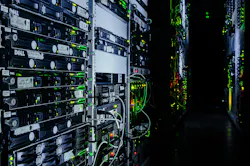

After rolling out welcome mats, Pennsylvania ramps up regs (127 data centers)
Gov. Josh Shapiro, another Democrat with White House aspirations, once welcomed an Amazon data center to his Commonwealth, but is now rolling out a framework for new data center regulations.
The governor’s Responsible Infrastructure Development initiative is intended to outline specific steps data center developers must take to demonstrate that proposed projects provide real value to local communities, mitigate or offset any impacts on Pennsylvanians, and are being developed responsibly, according to Shapiro’s office.
“If companies want the Commonwealth’s full support—they must meet strong standards on energy affordability, clean energy generation, transparency, workforce development, community impact, and environmental protection. This is about setting a higher bar for projects and ensuring development happens responsibly and in a way that benefits Pennsylvanians,” Shapiro said.
See also: Has physical AI gone ‘mainstream’? One new survey says yes
The measures require data center developers to pay for their own power, among other requirements.
If a project meets the standards set by GRID, it can then be fast-tracked via the Office of Transformation and Opportunity’s PA Permit Fast Track Program, which streamlines permitting for high-impact economic development and infrastructure projects requiring permits from multiple commonwealth agencies.
North Carolina rolls out ratepayer protections (33 data centers)
Another state that is debating regulating data centers with a combination of environmental reviews, noise limits, and cooling system restrictions is North Carolina, whose House passed the Ratepayer Protection Act in June.
The bill is now under consideration by the state Senate and would also require developers to pay for their own electricity, according to WNCN News.
The bill would even prohibit using eminent domain for data center construction and prohibit local tax breaks and incentives. The act would apply to data centers of more than 100 MW, so smaller ones would not be affected. On the more local level, some North Carolina communities have also issued moratoriums on new data centers.
North Carolina is an attractive prospect for developers, as power and land are relatively cheap, and the government has tried for years to attract technology companies in the hopes of becoming a digital hub of the South.

New Jersey determining fair cost shares (84 data centers)
New Jersey Gov. Mikie Sherrill recently signed major legislation that will hold utility companies and data centers accountable and provide relief to millions of resident households through immediate bill credits.
On July 7, three bills targeting consumer energy savings are reportedly estimated to save N.J. ratepayers more than $1 billion annually.
See also: Report: U.S. manufacturing loses $17.4 billion a year in wasted time among managers
The first bill, the Advanced Grid Technologies Act (S4411), strengthens state oversight of utility infrastructure investments to prevent excessive spending while supporting grid modernization.
Bill No. 2, Repeal ROE Adder (S1673), eliminates an automatic return-on-equity bonus, cutting inflated profit margins utilities receive simply for being connected to the regional grid operator PJM or a regional transmission organization that officials deem “unnecessary.”
Lastly, the Data Center Fair Share Act (S731) ensures Big Tech and hyperscalers pay for their own electrification demands. By establishing a separate rate-setting process, data centers will foot the bill for their fair share of energy—permanently shifting those heavy infrastructure costs away from New Jersey households.

In New York State, moratoriums and permit pauses
In an executive order, New York Gov. Kathy Hochul, a Democrat, created a one-year moratorium on new hyperscale data centers in the Empire State. The order pauses state environmental permits temporarily while a framework to protect electric ratepayers from spiking utility bills can be explored.
“As data center development threatens to hike up utility bills, deplete our natural resources, and create uncertainty for New Yorkers, it’s my responsibility to take action and lead,” Hochul said at a press conference from behind a placard reading “Protecting New Yorkers.”
“New York will lead the way in creating the strongest standards in the nation for data center development, ensuring that when companies succeed because of New York, New Yorkers succeed too.”
According to the governor’s office, New York is seeing unprecedented demand for data center development, driven by artificial intelligence and other high-demand computing operations.
The governor ordered the Department of Public Service earlier this year to require through policy that data centers either pay more to secure their electricity supply or provide their own infrastructure and electricity.
As data center development threatens to hike up utility bills, deplete our natural resources, and create uncertainty for New Yorkers, it’s my responsibility to take action and lead.
- New York Gov. Kathy Hochul
New York is developing a Generic Environmental Impact Statement (GEIS) for data centers to ensure new data centers coming online are being held to consistent standards, according to a release from Hochul’s office.
This standard will be used to assess the environmental impacts of newly built data centers, including their impact on electricity demand. Future data center construction will then have to adhere to this standard once it is finalized.
The state will also create a framework for providing clear guidance to local entities to help them negotiate community benefits as part of any large-scale data center deal, including local infrastructure improvements and direct financial support for their community.
See also: Survey reveals doubt among supply chain chiefs over AI investments
Also under consideration is for the DPS to create a fund to require data centers to invest in power grid upgrades for the state’s aging transmission and distribution infrastructure.
“The fund could support the procurement of new clean energy supply and establishment of an insurance pool to which developers may need to contribute to protect against speculative large loads that create uncertainty and increase costs,” according to the release.
“DPS will also consider approaches to require data centers to fund new clean electric generation dedicated to their operations, including but not limited to customer-sited distributed energy resources and battery storage.”
In the legislature, there is also an effort to repeal sales tax exemptions currently in place to make New York a more attractive place for large data center development.
The bottom line: The door isn't as wide open now for data centers
The wave of policy changes across the country signals a new phase in the data center boom.
Although approaches vary, a common theme is emerging: Large energy users will face greater scrutiny over how they connect to the grid, how they pay for the infrastructure needed to serve them, and how their growth affects existing customers.
As the expansion continues, the states that succeed will be those that can support digital infrastructure growth while ensuring the grid can evolve without placing an undue burden on the customers it serves.
About the Author
 Sarah Mattalian
Sarah Mattalian
Staff Writer
Sarah Mattalian is a Chicago-based journalist writing for Smart Industry and Automation World, two brands of Endeavor Business Media, covering industry trends and manufacturing technology. In 2025, she graduated with a master's degree in journalism from Northwestern University's Medill School of Journalism, specializing in health, environment and science reporting. She does freelance work as well, covering public health and the environment in Chicagoland and in the Midwest. Her work has appeared in Inside Climate News, Inside Washington Publishers, NBC4 in Washington, D.C., The Durango Herald and North Jersey Daily News. She has a translation certificate in Spanish.
 Jeff Postelwait
Jeff Postelwait
Jeff Postelwait is managing editor of T&D World, a sister brand to Smart Industry at Endeavor Business Media. He is a writer and editor with a background in newspapers and online editing who has been writing about the electric utility industry since 2008.
He is senior editor for T&D World magazine and sits on the advisory board of the T&D World Conference and Exhibition. Utility Products, Power Engineering, Powergrid International and Electric Light & Power are some of the other publications in which his work has been featured.
He received his degree in journalism news editing from Oklahoma State University and operates out of Oregon.