Trane, Eaton aim to improve data center efficiency as regulations slam power usage
What you'll learn:
- Trane and Eaton developed a design for data centers built on NVIDIA's AI factory blueprint.
- The architecture aims to improve energy efficiency and lower installation costs.
- The collaboration comes as data centers face growing scrutiny over power consumption and increasing regulatory oversight.
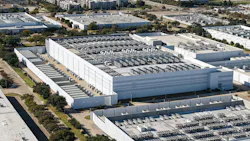

Trane Technologies and Eaton announced a collaboration to integrate advanced thermal management and electrical system architectures to help accelerate AI-factory deployment, specifically built for the NVIDIA AI factory blueprint.
The companies developed a reference design that aims to replace the manual design process with a unified system for power and cooling for data centers, which they said can achieve energy efficiency gains, cut copper use, and reduce installation costs.
See also: As AI adoption matures, data center controversies move to the fore
The collaboration is announced as data centers are shrouded in controversy, with regulations varying state-by-state as lawmakers question how to accommodate them and other large compute facilities, including those handling industrial AI demands, when public opinion is souring on them.

Some states are losing billions in tax revenue and their constituents are asking why they should have to foot the bill for some of the world’s wealthiest companies—Big Tech heavyweights such as Microsoft, Google, and Amazon—that are behind or substantially benefit from the construction or existence of data centers.
As a result, data center regulations vary state-by-state, as lawmakers evaluate who should bear the cost of the facilities, increase regulatory oversight and limit construction through pauses and moratoriums.
Additionally, many manufacturers are piloting and deploying AI in their facilities, and demand only increases.
The politics and perception of power usage
A large part of the data center conversation is centered around how to power these facilities. The question of how to supply enough power to facilities packed with computer servers, data drives, and networking gear remains hard to answer—and public opinion, in the U.S. at least, is souring toward these facilities in part because of their ever-expanding power usage and their effects on utility capacity and customer bills in countless communities.
During the last legislative session, there were more than 50 pieces of legislation related to energy—and six of them had to do with data center electricity use.
See also: From labs to factories: Physical AI’s growth expected to explode
The design from Trane and Eaton could potentially pose a solution for the power needs of these facilities.
The new reference design involves using medium-voltage designs for higher-power density AI factories instead of low-voltage designs. The design is included in both the Trane Continuum Rubin DSX and Eaton Beam Rubin DSX platforms, built in alignment with the NVIDIA DSX platforms, with Eaton’s technology helping provide power distribution for the Trane platform, according to the companies.
This is a departure from the current siloed infrastructure of data centers into a unified architecture to prioritize power distribution and cooling systems. The companies said that the design can help data center customers accelerate development cycles through pre-coordinated thermal and electrical power systems from grid to chip.
See also: For two firms, better data is making for more useful AI implementations
According to the companies, the design can help establish a more consistent method for planning and delivering electrical, thermal and digital control infrastructure in AI‑driven environments.
“AI and high-performance computing are transforming the demands placed on data centers, and customers want solutions that can keep pace with their needs,” said Mauro J. Atalla, senior vice president and chief technology and sustainability officer at Trane.
“By combining our advanced thermal management solutions with Eaton’s innovative power management solutions, we’re delivering a coordinated design that helps customers accelerate deployment, improve efficiency and confidently plan to scale for the future.”
About the Author
 Sarah Mattalian
Sarah Mattalian
Staff Writer
Sarah Mattalian is a Chicago-based journalist writing for Smart Industry and Automation World, two brands of Endeavor Business Media, covering industry trends and manufacturing technology. In 2025, she graduated with a master's degree in journalism from Northwestern University's Medill School of Journalism, specializing in health, environment and science reporting. She does freelance work as well, covering public health and the environment in Chicagoland and in the Midwest. Her work has appeared in Inside Climate News, Inside Washington Publishers, NBC4 in Washington, D.C., The Durango Herald and North Jersey Daily News. She has a translation certificate in Spanish.