With partnerships and software reveals, Siemens leadership plots a course for industrial AI
Key Highlights
- Siemens unveiled Intelligence Center X, introducing its own AI virtual co-workers to handle repetitive factory tasks and scale hybrid human AI workflows.
- A new partnership with HighByte connects IT and OT data, helping manufacturers build and scale industrial AI models and applications.
- President and CEO emphasizes three leadership lessons: stay close to problems, focus on people and processes over technology alone, and ensure strong, unified data foundations.
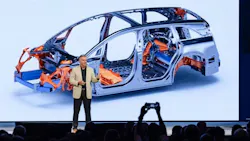
Early this month, Smart Industry and IndustryWeek visited Realize LIVE Americas 2026 in downtown Detroit, the annual digital transformation show held by Siemens Digital Industries Software, and our brands came away not only with detailed insight on the company's latest products but also thoughts on the direction that industrial transformation may go from its president and CEO.
See also: Siemens: You’ve got an (AI) co-worker in me
At the show, Siemens introduced software—its own version that uses agentic AI virtual workers alongside human employees—that it hopes will redefine factory workflows and help perform high-volume or repetitive tasks.
Called Intelligence Center X, the Siemens product is part of the subsidiary’s high-profile Xcelerator software portfolio and was its lead product announcement in the Motor City before hundreds of attendees.
Siemens also said it's partnering with another software company, HighByte, to allow customers to connect industrial data from both IT and OT sources to build AI models, agents and applications through the two companies’ industrial software operations platforms.
See also: Siemens, HighByte team to offer industrial AI software platforms
HighByte’s Intelligence Hub is industrial data operations software designed for data modeling, orchestration and governance and is to be available as an application on the Siemens Industrial Edge Marketplace. The companies are offering their software jointly on one platform so customers can scale industrial data sets, they said during the rollout.
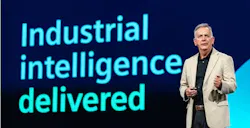
“When AI is connected to real business processes and enterprise data, it delivers measurable impact at scale,” Tony Hemmelgarn, president and CEO of Siemens Digital Industries Software, added.
In the midst of the product launches and partnership announcements, IndustryWeek's and Smart Industry's Dennis Scimeca sat down with Hemmelgarn to talk about his beginnings in the manufacturing software industry and three lessons for leaders in how they need to handle the digital side of their businesses. Their chat is edited for length and clarity:
Scimeca: You’re looking at big software stacks and entire plants. Did you ever want to work at that scale, versus sticking strictly with the design software side?
Hemmelgarn: Years ago, when I was doing the deployment of Ford and other places, I started to realize that it’s not just about the CAD. Data management was a big deal.
When I started focusing on that, a lot of my peers said, "What are you doing? That’s the boring side of the business. Why would you ever go there?
See also: New Darktrace report spotlights growing cybersecurity risks manufacturers face from AI
I said, "Well, it can be very exciting what you do there as well.” And then when I saw what Technomatix was with digital manufacturing all those years ago … this thing’s getting bigger, and it just keeps getting bigger. There’s more and more we can simulate, more and more we can think about as a digital twin.
Now I probably go too far the other way, I probably am already projecting things I think we could be doing that are way beyond maybe what we’re able to do right now, but it will happen. It will. Absolutely. In this space.

 dreamstime_xxl_251128356
Scimeca: Do you think anyone in manufacturing leadership has to be able to project themselves into the future in terms of software?
Hemmelgarn: Someday I think I’ll write a book about the disconnection between projects that are being implemented and leadership in a company. Why are all these projects late? Why is it so hard to implement PLM, even ERP systems, whatever?
I argue it’s because the management’s not close enough to the problem. They say, “Just get this done.” Well, wait a minute, you’ve got to make some tough decisions about how you’re going to work as an organization, what you’re doing, and you’re kind of letting it run amok amongst the teams, and they’re not aligned on what’s going on.
Most times when we struggle with implementations, it’s the IT organization not aligned with the business. And then when you [ask], “Who’s the guy making the call here?” and they’re not close enough to the problem.
The best deployments I’ve seen are where the management’s right there, they understand this stuff, and they’re involved with it from day to day, and help drive it through, carrying the flag. “This is what we’re going to do.”
When AI is connected to real business processes and enterprise data, it delivers measurable impact at scale.
- Tony Hemmelgarn, Siemens Digital Industries Software president and CEO
Nine times out of 10 there’s a disconnect the other way, it’s why projects are over budget, they’re not on time, they don’t deliver what they want, because they’re not close enough to what the problem is, and [management isn’t] there and helping.
I’m not saying you have to be the deep technical guy, but you should have an understanding of what you’re trying to accomplish and how you’re going to get there. And by the way, don’t believe your teams that are creative engineers when they say "We can just build this [software] ourselves and we’ll integrate it, we’ll take care of it." You’ll never get there because the world’s too competitive.
See also: Why industrial AI requires a data ops foundation to scale
There’s a reason nobody builds their own CAD tools anymore. They did years ago. [Now,] you can’t afford to. You’ll never keep up. Yet we still had people saying, "I’m going to build my own MES systems." Really? You’re trying to compete in your space and your differentiator is going to be because you built your own MES system?
I don’t think so. And I think that’s one of the challenges with this, is people have to get close to the problem and not act like it’s somebody else’s problem to worry about in the organization in engineering or manufacturing. My opinion.
Scimeca: I’m hoping to get three leadership lessons we can share. So let’s call that lesson one, you have to be close to the problem. What’s lesson number two?
Hemmelgarn: It’s not the tech, it’s the people in the process. … The tech’s important, very important. You got to have it right, but if you haven’t thought about the people and the processes and everything that go along with it, be careful.
Think about 3D printing, additive manufacturing. I’ve had customers over the years say, “Here’s this part, can I 3D print it?” Why would you want to if you’re not going to change the way you design it? Why do you want to print it? You want to optimize that thing to take advantage of what 3D printing does, lightweight it, make it stronger but much lighter, and there’s lattice work and all these kinds of things you could do.
Customers run old software because they are not able to upgrade, because they customize the heck out of it. I think you have to be very, very careful when you start thinking you’re so special versus the rest of the world.
- Hemmelgarn
You have to change your design process to be able to do that. And I think most times people don’t recognize that until it’s too late.
I had a discussion today about customization. I’ve heard so many people talk about [not wanting to customize software] … but oftentimes they do and that’s a painful thing. You pay to customize, you pay to maintain, you pay to get out of it.
Customers run old software because they are not able to upgrade, because they customize the heck out of it. I think you have to be very, very careful when you start thinking you’re so special versus the rest of the world.
Where you can differentiate, and I argue this a lot, is speed. We all have the same tools, we all have the same thing, but the guys that can move faster through the implementation start to have a competitive advantage.
See also: Siemens entry aims to make agentic AI more affordable for SMBs
My job is either to convince you that you’re not as special as you think you are, or you convince me that we’re missing something in our software. And that can happen. We keep developing our software. But there are a lot of times when somebody thinks they’ve got something unique. I deal with thousands of companies all over the world, I can tell you that’s not as unique as [they] think it is and probably not going to be a differentiator for [them].
Scimeca: So could the second lesson be “Don’t assume you’re as original as you think you are?”
Hemmelgarn: I want to be careful of that because it sounds condescending. I would just say, make sure you really understand where your true differentiation is with your IP and the things that you do versus where somebody tells you it is.
Scimeca: Okay. Lesson No. 3?
Hemmelgarn: This gets a little specific, but I find it interesting that you go to school for engineering and you learn statics, dynamics, thermodynamics, strength of materials, and I will tell you that 90% of the time in a meeting with customers over the years, the discussion is bill of material, and what do I do with a bill of material, and how do I drive it?
The bill of material is your backbone, it’s your information, it's everything you're doing in the company. Do you have a handle on that? … If your data is not trusted and accurate AI can’t work, but I would also argue, if you don’t have a way to figure out how to deal with the data in a true engineering environment that’s moving dynamically, you’re always going to fall behind.
Scimeca: So, the third lesson might be to really understand your BOM as soon as you get into a new position.
Hemmelgarn: But I want to be careful, it’s not just the BOM, the parts list, it’s your bill of process, your bill of material, your bill of service, all of those things together. We like to say you have one single source of truth and different views of what’s going on.
So, it’s not just the bill of design, it’s not just the bill of manufacture, it’s all of that encompassed together that you really need to understand. It’s more about, do you understand your configuration of your data, where your data is at, how it goes through your life cycle, how it goes through the full process of everything you’re dealing with?
About the Author
 Dennis Scimeca
Dennis Scimeca
Dennis Scimeca is a veteran technology journalist with particular experience in vision system technology, machine learning/artificial intelligence, virtual and augmented reality, and interactive entertainment. He has experience writing for consumer, developer, and B2B audiences with bylines in many highly regarded specialist and mainstream outlets.
His home base is IndustryWeek, where he covers the continuing expansion of new technologies into the manufacturing world and the competitive advantages gained by learning and employing these new tools. He also seeks to build connections between manufacturers by sharing the stories of their challenges and successes employing new technologies. If you would like to share your story with IndustryWeek, please contact him at [email protected].
 Sarah Mattalian
Sarah Mattalian
Staff Writer
Sarah Mattalian is a Chicago-based journalist writing for Smart Industry and Automation World, two brands of Endeavor Business Media, covering industry trends and manufacturing technology. In 2025, she graduated with a master's degree in journalism from Northwestern University's Medill School of Journalism, specializing in health, environment and science reporting. She does freelance work as well, covering public health and the environment in Chicagoland and in the Midwest. Her work has appeared in Inside Climate News, Inside Washington Publishers, NBC4 in Washington, D.C., The Durango Herald and North Jersey Daily News. She has a translation certificate in Spanish.