Hawaii DOT saves in maintenance costs through AI analytics, data, machine vision
Key Highlights
- Crowdsourced dashcams plus AI automated inspections, delivering real-time visibility and cutting manual surveys by 95% in Hawaii.
- Machine vision detects road issues early, enabling proactive maintenance that lowers costs and improves safety.
- Centralized data eliminates duplicate reports and guides smarter prioritization, budgeting, and resource allocation.
- Automation drives ROI: More than $940,000 a year saved via reduced labor, faster analysis, and improved maintenance planning.
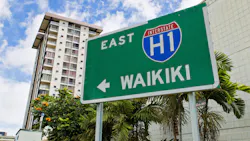
The Hawaii Department of Transportation is deploying AI and machine learning software to analyze data crowdsourced from drivers with its road condition management and asset inventory solution, and HDOT said this approach has resulted in savings of almost $1 million per year.
HDOT is deploying AI technology to monitor real-time road condition management to efficiently identify and analyze issues so its teams can cut costs, better prioritize and address maintenance and repairs, and ensure roadway safety.
The Hawaii deployment has lessons that manufacturers could learn in deploying AI and machine learning tools to help cut maintenance events.
The Blyncsy solution, by Bentley Systems, an infrastructure engineering software company, improves HDOT’s stewardship of its critical transportation assets with perpetual real-time visibility into the state of the roads, according to HDOT. It crowdsources image collection and automatically detects issues and generates reports on road conditions.
The centralized data eliminates duplicate reports and guides smarter prioritization, budgeting, and resource allocation.
“Bentley’s goal is to give transportation agencies real-time visibility into the state of their roadways," said Mark Pittman, senior director of transportation AI at Bentley Systems. “By combining AI and machine learning analytics with dashcam imagery, we are helping Hawaii DOT move from reactive to proactive maintenance to reduce risk, lower costs, and save lives.”
Hawaii’s road maintenance challenge is rather unique due to decades-old roads, geography, weather conditions and potential for hurricanes, volcanic activity and mudslides. To keep up, HDOT conducted weekly manual roadway surveys and expanded expensive traffic camera coverage.
In 2022, however, the state and HDOT sought to determine how much of its monitoring process for 1,013 miles of roadway across the four islands, Hawaii, Maui, Kauai, and Oahu, could be replaced or automated with comprehensive, crowdsourced dashcam imagery and advanced machine learning models.
In addition to accurately detecting diverse conditions and hazards, the solution also needed to incorporate PASER, the Pavement Surface Evaluation and Rating system.
Automated inspection tool helps in proactive road maintenance
HDOT chose Blyncsy, part of Bentley’s Asset Analytics portfolio, for its real-time road condition management and asset inventory capabilities powered by machine vision, crowdsourced data, and AI analytics.
Increasing situational awareness with machine vision and automating road assessment processes greatly reduces the amount, cost, and environmental impact of manual work. For agencies, the platform’s scalable roadway data and AI analytics enable smarter decision-making, lower costs, greater stakeholder trust, and clearer budget justification.
First, Blyncsy captured an array of high-resolution roadway imagery across Hawaii’s four main islands via dashcams. HDOT then started using the solution’s machine learning algorithms to analyze the imagery and identify common and uncommon issues.

Using the results, the team eliminated duplicate reports, verified the true condition of the roads and whether fixes were performed in the correct location, and reported the data to different divisions of the organization in their preferred formats.
The accumulated information helped to determine how to prioritize and allocate resources for repairs and maintenance.
By January 2026, HDOT was ready to expand its crowdsourcing capability from primarily fleet vehicles to hundreds of privately-owned vehicles across the islands. Boosting the volume of data collected would enhance visibility and machine learning analytics.
Automatic dashcam uploads, analyzed by AI
For the Eyes on the Road program participants, their dashcam imagery is uploaded automatically to the cloud through a cellular connection and then analyzed anonymously by AI and machine learning software, enabling HDOT to be alerted to roadway issues in near real time.
See also: Why industrial AI requires a data ops foundation to scale
Helping to spot road problems early—before they become safety hazards—enables prompt prioritization and maintenance based on data-driven decisions.
With Blyncsy providing data on road conditions, PASER scores, and paint line conditions on a weekly basis, HDOT can monitor changes and degradation over the lifespan of the project.
Hawaii DOT maximizes safety, achieves millions in savings
Recently, HDOT and the University of Hawaii College of Engineering to invite everyday drivers to become part of the solution. Its Eyes on the Road program makes 1,000 high-resolution dash cameras available free of charge to approved state residents to record the roads they travel on normally each day, enabling maintenance crews to respond more swiftly to road issues.
By combining AI and machine learning analytics with dashcam imagery, we are helping Hawaii DOT move from reactive to proactive maintenance to reduce risk, lower costs, and save lives.
- Mark Pittman, Bentley Systems
Blyncsy software and the Eyes on the Road program greatly reduced HDOT’s need for manual roadway inspections while enabling safer roads and a significant return on investment, according to Bentley Systems.
With real-time, crowdsourced dashcam imagery and automated roadway assessments driving data-based decisions, the agency is efficiently prioritizing and planning maintenance and repairs.
See also: At TxDOT, a strategy to restructure IT, retire mainframe systems and go cloud-first
HDOT is reaping these benefits, according to Blyncsy:
- 95% reduction in manual roadway surveys.
- 96% potential savings compared to manual or LiDAR-based inspections.
- 97% possible savings with roadway preservation vs. Reconstruction.
- 23,286 pounds of carbon emissions saved per work vehicle per year by avoiding manual inspections.
An estimated $940,000 per year in efficiency savings is gained by detecting more issues faster with the upgraded inspection process. Points of value include:
- $250,000 saved annually by slashing manual inspection hours, mileage costs, and vehicle maintenance costs.
- $320,000 saved annually by avoiding manual cataloging and entry of an average of 930 issues found per week.
- $300,000 saved annually by accelerating paint line visibility analysis and PASER scoring.
“The operational insights generated allow transportation leaders to make smarter, fiscally responsible decisions founded on objective data rather than subjective assessments,” said Bentley Systems' Pittman.
“This shift enables them to prioritize maintenance where it is most needed, address minor issues before they escalate into dangerous and expensive hazards, and ultimately maximize the impact of every taxpayer dollar.”

About the Author
 Sarah Mattalian
Sarah Mattalian
Staff Writer
Sarah Mattalian is a Chicago-based journalist writing for Smart Industry and Automation World, two brands of Endeavor Business Media, covering industry trends and manufacturing technology. In 2025, she graduated with a master's degree in journalism from Northwestern University's Medill School of Journalism, specializing in health, environment and science reporting. She does freelance work as well, covering public health and the environment in Chicagoland and in the Midwest. Her work has appeared in Inside Climate News, Inside Washington Publishers, NBC4 in Washington, D.C., The Durango Herald and North Jersey Daily News. She has a translation certificate in Spanish.