How digitally mature is manufacturing today?
What you'll learn:
- Progression from siloed tools to fully integrated digital enterprises facilitates better data continuity.
- The Industrial Metaverse represents the next evolution, offering immersive environments for real-time decision-making.
- Early investment in digital technologies supports resilience, agility, and the ability to respond swiftly to market disruptions.
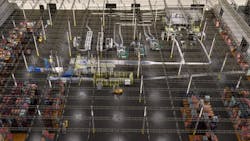
As we move into 2026, maintaining the optimal balance of complexity, cost and speed has become increasingly important in the development of products, systems, and services.
The demand for customization, intelligence, flexibility and connectivity continues to drive up product and production complexity. Simultaneously, companies are facing pressure to reduce development expenditures in response to customer cost concerns and market competition. This means companies must bring new products, services and features to market faster and more efficiently than ever.
Many businesses are struggling to facilitate innovation, speed and efficiency across domains in this new environment. A digital transformation strategy centered on the comprehensive Digital Twin is the best path to success. It can help companies embrace the challenges posed by growing complexity, effectively tighten budgets, and accelerate innovation at the same time. Early investment in the Digital Twin and digitalization lays the groundwork for future innovation. These investments empower an organization to grow, adapt and thrive amidst continual change and unforeseen challenges.
Digitalization: A perfect partner to advanced development
Companies that adopt and execute a digitalization strategy are building a foundation for their future success. Digitalization offers critical advantages for innovation, agility and resilience, with design and engineering processes accelerating product and production definitions, as well as development. This is possible because the Digital Twin eases collaboration across domain silos, preserves data continuity, and facilitates greater automation of tedious tasks through the integration of industrial artificial intelligence (AI).
Instead of repetitive or perfunctory work, engineers can focus on value-add activities, such as investigating more design alternatives, potentially those generated by industrial AI, to uncover the best performing designs under given constraints. The effects of updated requirements, physical design changes, new manufacturing processes—even new software features—can be understood better and more quickly through the Digital Twin. Connected digital models enable engineers to investigate impacts across all domains in the virtual world for assets both still in development and already in the field. As an example, a software feature can be deployed to a virtual instance of a chip to assess changes in power demands and thermal characteristics.
The speed and breadth enabled by digitalization becomes an asset during market disruptions. Digitalization helps companies respond to dynamic market conditions more readily with updated supply strategies or system designs that account for new requirements. This is particularly powerful for supply chain management where digitalization supports greater transparency and collaboration among partners, leading to greater agility for all. Companies that work closely with suppliers can then leverage clearer signals to respond to changes more quickly.
Stages of digitalization maturity
Almost every company has embraced digitalization to some degree, though differences arise in the degree and rate of digitalization progression between organizations internally and externally. In this uneven landscape, digitalization progress can be measured by the maturity of the most digitalized domain and the average level of digitalization across all domains and processes within an organization.
Using these measurements, we can assemble a spectrum of digitalization to describe the landscape in industry. At one end, there are companies that have not begun their digital transformation journey. Instead, they continue to work in silos with disconnected tools and processes. The other end of the spectrum describes a future state for companies characterized by full digitalization and integration across the enterprise: the Digital Enterprise. A Digital Enterprise will employ the comprehensive Digital Twin, industrial AI and the Industrial Metaverse to execute engineering, manufacturing, supply, and business decisions.
Many companies fall somewhere in the middle. Those early in their digitalization journey have adopted some digitalized applications for engineering, manufacturing, logistics and other domains – most often including CAD, simulation and MES. These applications are rarely connected by a digital thread, though these companies may be in the early stages of adopting digital threads in individual domains.
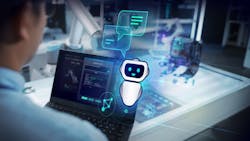
Today, digitalization leaders have achieved a high degree of digitalization and integration in at least one domain, such as engineering or manufacturing. A highly digitalized manufacturer, for instance, might use connected CNC machines within an integrated production digital thread. The connected CNC machines can automatically alert operators to anomalous sensor readings during cutting operations. The operator can then use the Digital Twin to review the current operation to pinpoint the moment of interest and diagnose the cause of the alert. Such a process helps identify issues early, leading to more responsive maintenance and update processes.
Building toward the Industrial Metaverse
Ultimately, digitalization puts companies on the path to building the Industrial Metaverse – the next evolution of digitalization, AI and the comprehensive Digital Twin. The Industrial Metaverse will be a place where users can interact and experience the comprehensive Digital Twin in an environment that facilitates engineering and business decision making based on robust, precise and real-time data.
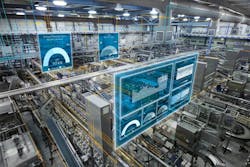
Beyond the core technologies, the creation of frameworks to guide the connection and orchestration of data from various authoring systems throughout an organization and providing this data in a unified user experience will become increasingly important. The deployment of AI and collaboration with hyper-scalers is another focus, which already has yielded new capabilities that combine 3D visualization, simulation and factory data into one unified, immersive environment.
Building Digital-First for the Future
Growing complexity, cost and speed are pushing companies to seek new methods of managing design, production, supply chains and operations that can adapt at pace. Investing in a digitalization strategy now enables companies to address these challenges by supporting innovation, agility and resiliency.
Technological advancement is only part of the equation. Organizational adaptation to new technologies and processes is often a major obstacle to change. As companies prepare for the future through digitalization, it is crucial that they focus on providing support to the practitioners of change within the organization.
Observing the current state of digitalization in industry reveals that the competitive field is far from settled. Companies that embrace change and proactively adopt digital technology will secure strong competitive footing. In an increasingly uncertain future, the companies that commit to digitalization will compound early advantages and surge ahead of the competition.
About the Author
 Dale Tutt
Dale Tutt
Dale Tutt is VP of global industry strategy at Siemens Digital Industries Software. He leads a team of experts to develop and execute industry-specific product and marketing strategies in collaboration with the global product, sales, and business development teams. He has more than five years of experience in this role combined with long experience in the aerospace and defense industries.